Ramón Cortés
Palmero
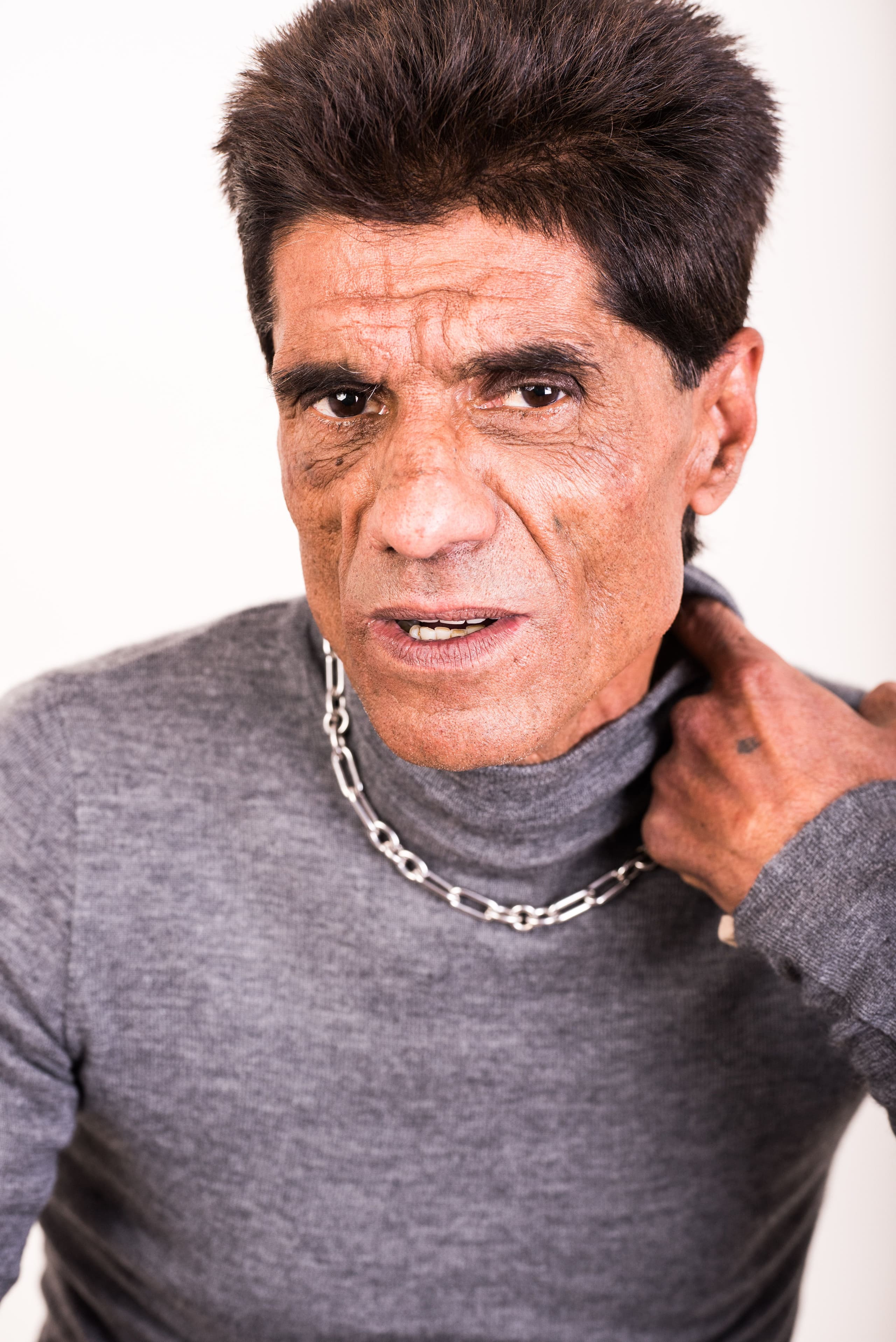
Ramon Cortés is hurt when someone gets up from his side after he takes a seat on the bus. He knows his appearance can be intimidating. “But, comadre,” he tells me sadly, after asking my permission to address me with this Romani term of endearment that denotes trust: “You saw it straight away. I couldn’t hurt a fly.”
Ramon Cortés was born in a pavilion in what was known as Barcelona’s invisible periphery. Sheets were hung up to separate families and give them a little privacy. Years later, they moved to the shantytown of Can Tunis. He tells me he has seen everything. That he doesn’t have a single happy memory from his childhood. Nor from his youth.
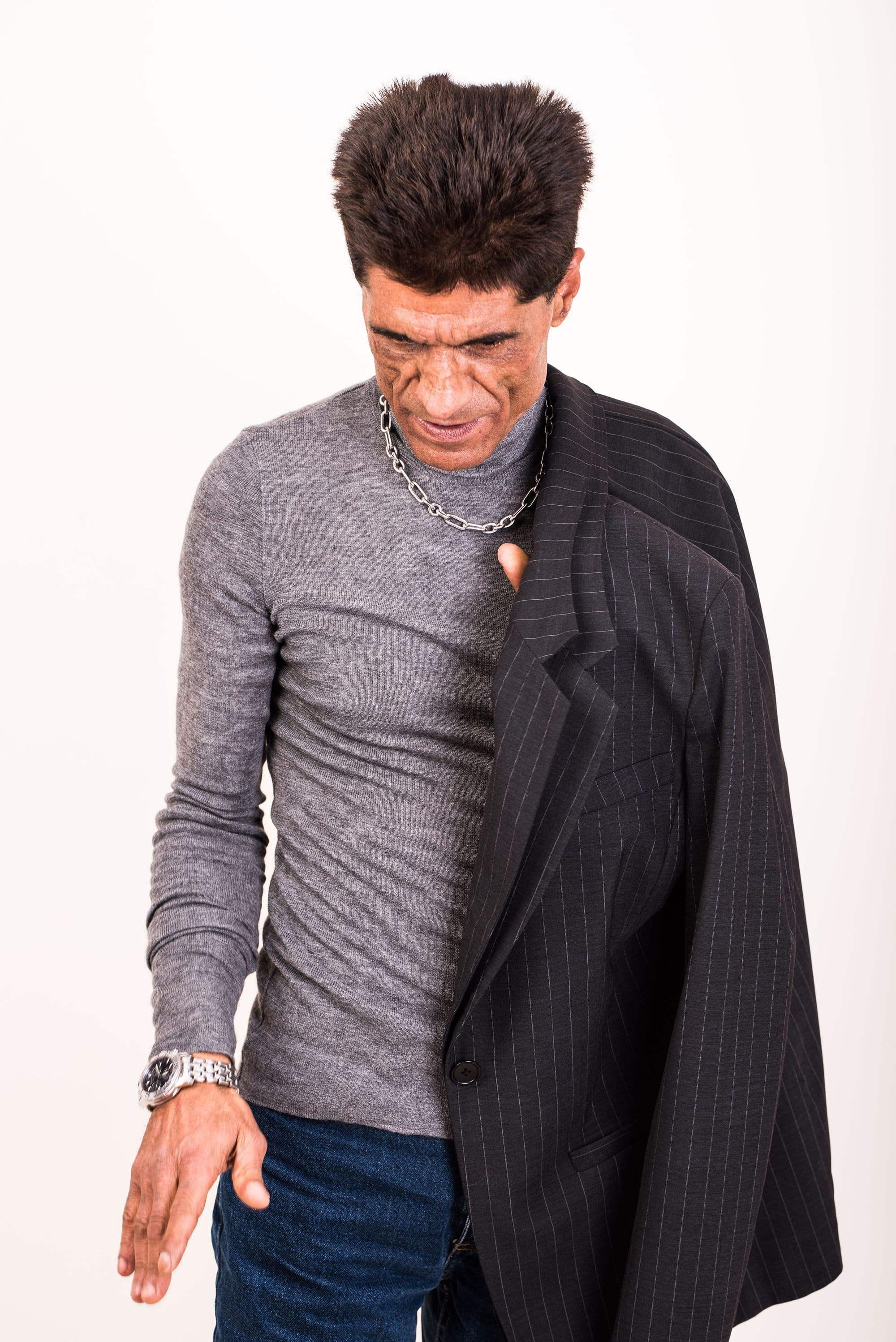
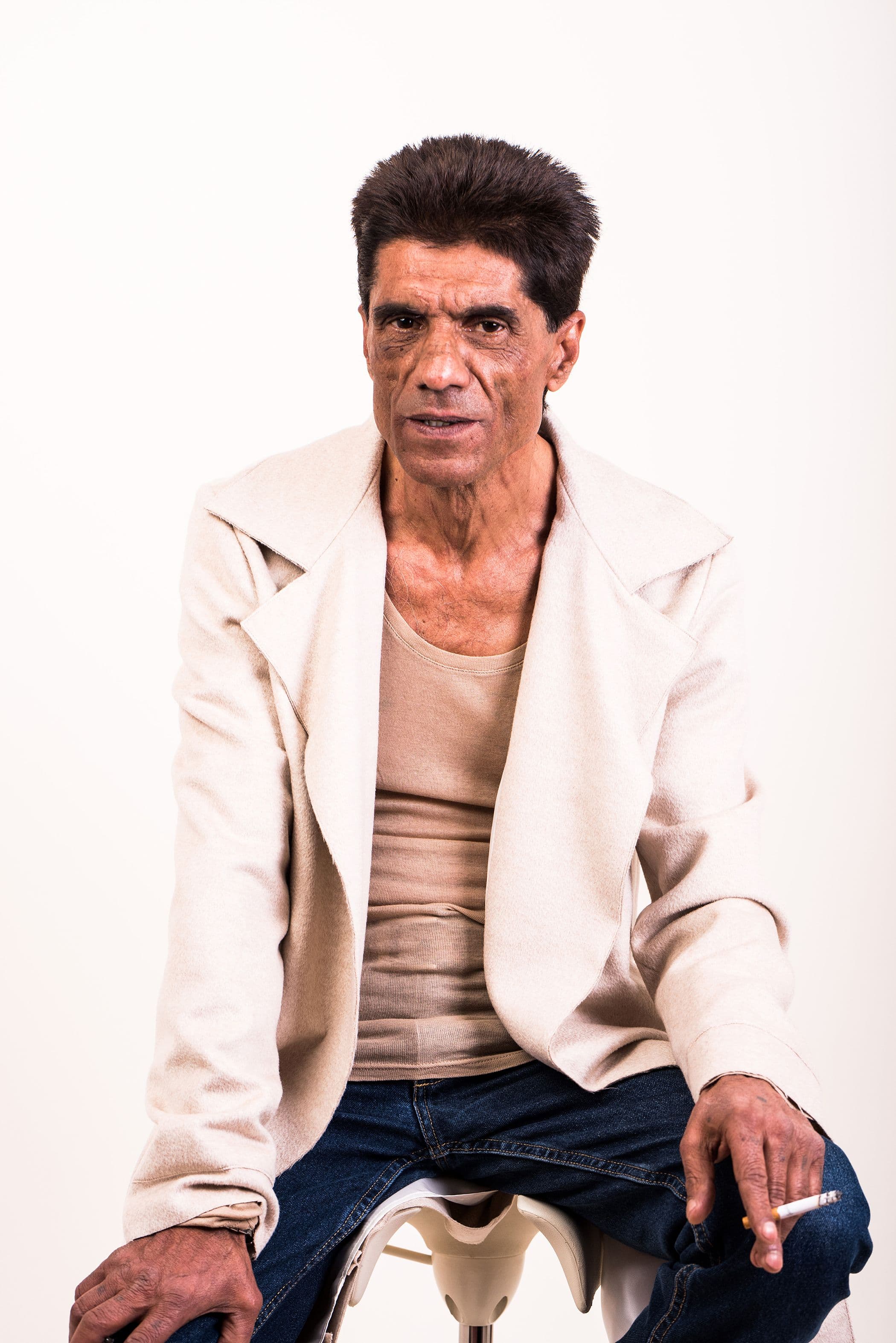
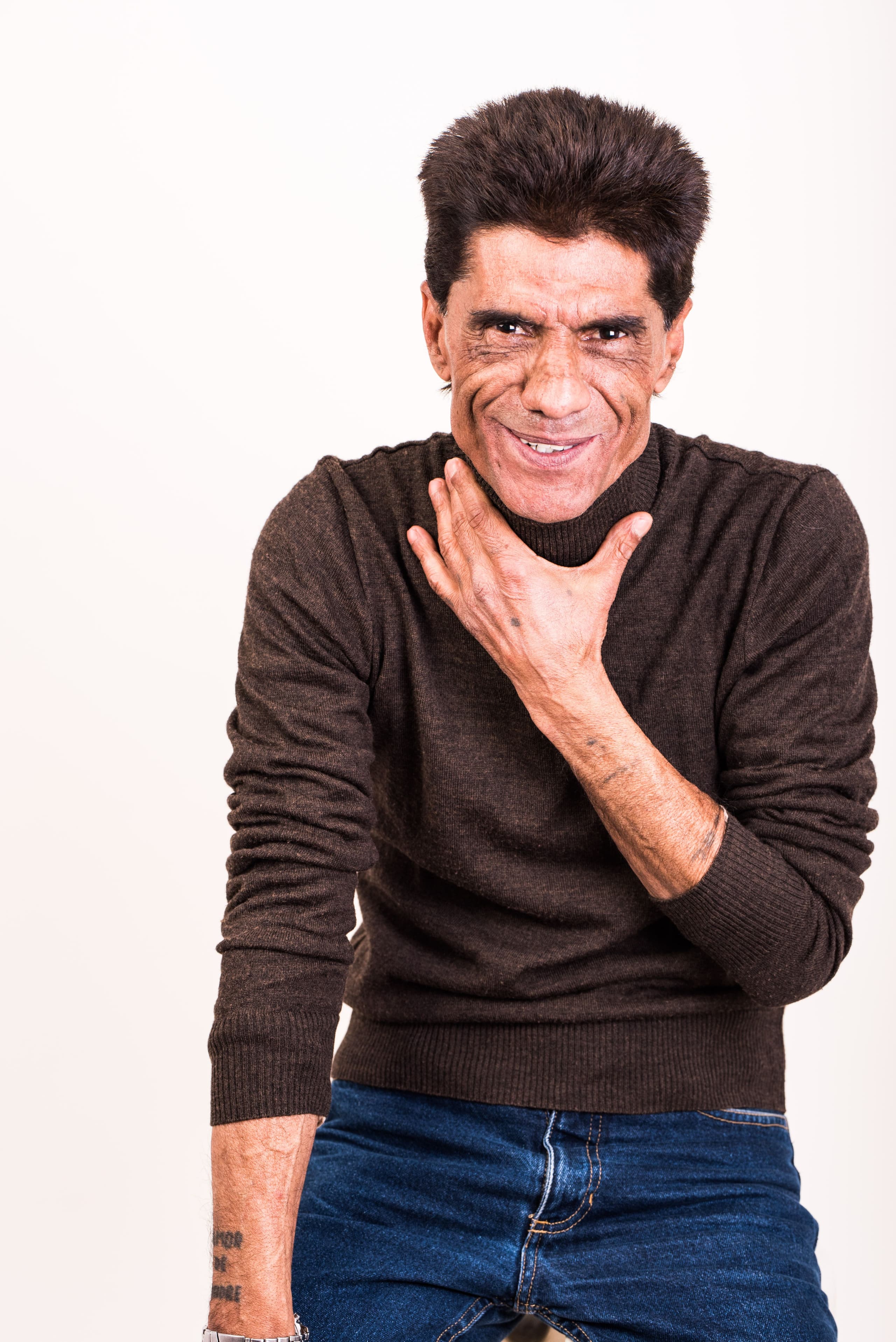
This is not the first time he has posed for a camera. He does it calmly, giving me a series of gestures he has clearly rehearsed and that work very well. He arrives at the shoot carrying a plastic bag and some enormous, loose-fitting viscose shirts in orange and lime green, which I will later regret not using. I dress him in a fitted turtleneck and Gabriella Collgarments pieces that look incredible on him.
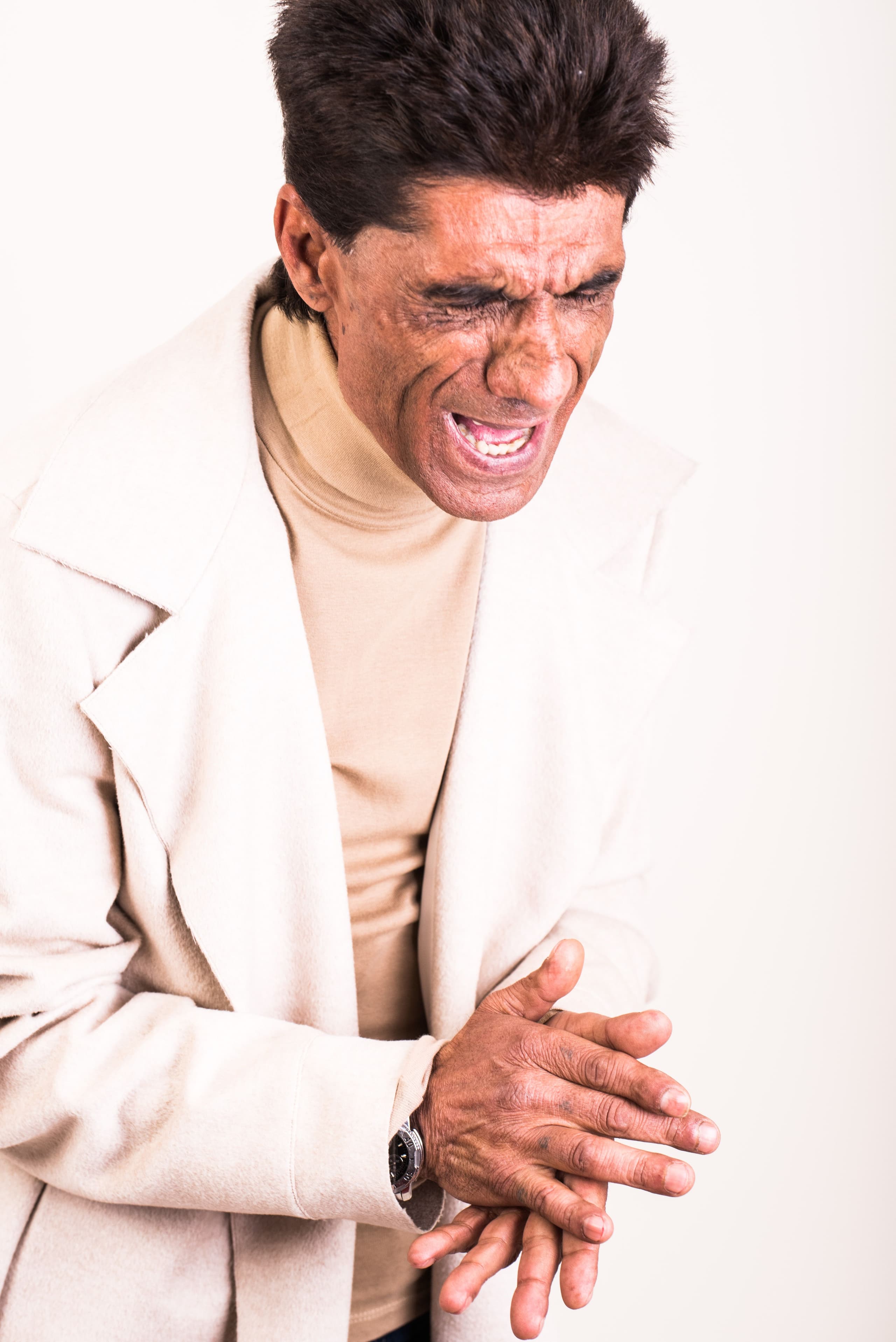
He tells me that throughout his life he has done all kinds of things, but that his real talent, the thing he truly does well, is being a palmero. “It’s not really a thing anymore, nobody pays for it, everyone thinks they can clap. But Peret said: ‘If I turn around and my palmeros aren’t right there with me, I’m out of here. Because without clapping, there’s nothing.’”
Next Project
Ramón Cortés
Palmero
Ramon Cortés is hurt when someone gets up from his side after he takes a seat on the bus. He knows his appearance can be intimidating. “But, comadre,” he tells me sadly, after asking my permission to address me with this Romani term of endearment that denotes trust: “You saw it straight away. I couldn’t hurt a fly.”
Ramon Cortés was born in a pavilion in what was known as Barcelona’s invisible periphery. Sheets were hung up to separate families and give them a little privacy. Years later, they moved to the shantytown of Can Tunis. He tells me he has seen everything. That he doesn’t have a single happy memory from his childhood. Nor from his youth.
This is not the first time he has posed for a camera. He does it calmly, giving me a series of gestures he has clearly rehearsed and that work very well. He arrives at the shoot carrying a plastic bag and some enormous, loose-fitting viscose shirts in orange and lime green, which I will later regret not using. I dress him in a fitted turtleneck and Gabriella Collgarments pieces that look incredible on him.
He tells me that throughout his life he has done all kinds of things, but that his real talent, the thing he truly does well, is being a palmero. “It’s not really a thing anymore, nobody pays for it, everyone thinks they can clap. But Peret said: ‘If I turn around and my palmeros aren’t right there with me, I’m out of here. Because without clapping, there’s nothing.’”